
Lifting the Export Fog: A Conceptual Framework for Expanding MSME Export Participation in Indonesia
SSRN · 10.2139/ssrn.7242821 ·
Institutions I have worked with














About
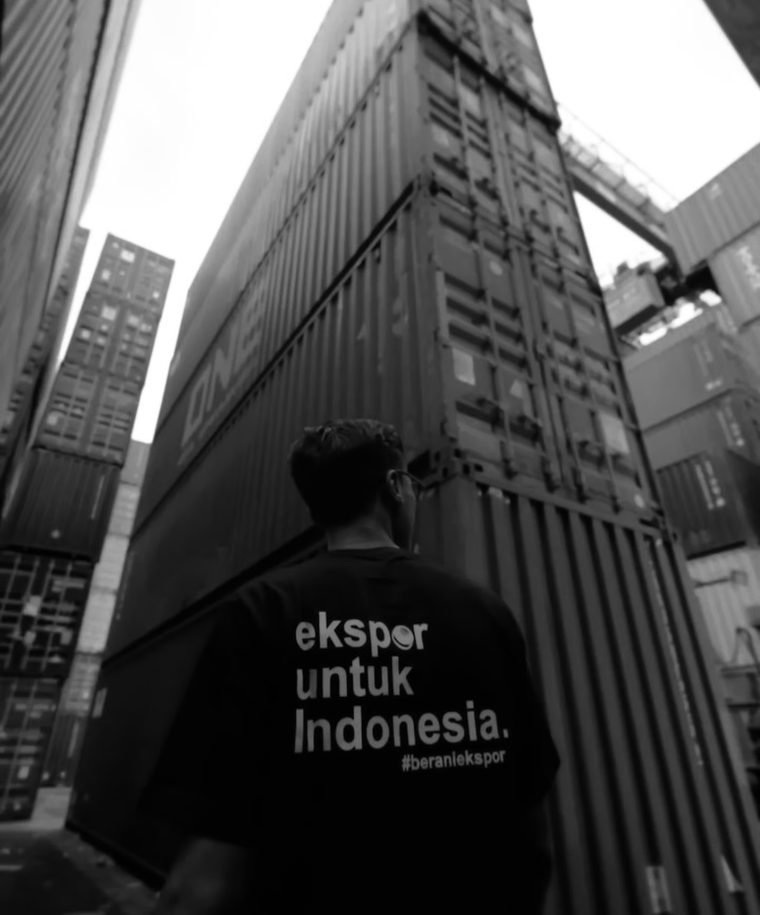
Choirul Amin, S.Ak., M.Econ. has spent more than a decade inside Indonesia’s customs administration and international trade. He founded Ekspor.id to teach small Indonesian businesses how to sell abroad, and has since trained exporters in most provinces of the country. He holds a Master of Economics from the National University of Singapore.
The case
Exports reached US$282.9 billion in 2025, the highest figure on record. Set against the size of the economy, that is 22 percent of GDP — a quarter of Vietnam’s ratio, and less than a third of Malaysia’s. What limits Indonesia is not demand for what it makes. It is how few of its businesses ever reach that demand.
World Bank, World Development Indicators (NE.EXP.GNFS.ZS), 2024.
Badan Pusat Statistik. The 2025 figure is preliminary.
US$ billion and share of non-oil-and-gas exports (US$269.8 bn). Kementerian Perdagangan, on BPS data.
Three commodity groups — palm oil, coal, and iron and steel — carry 35 percent of everything Indonesia sells abroad outside oil and gas. That value is real. It is also concentrated in a small number of large firms and a handful of tariff chapters. Meanwhile the World Trade Organization expects world merchandise trade volume to grow 1.9 percent in 2026, down from an estimated 4.6 percent in 2025. Growth from here will not arrive on a rising tide. It has to come from more Indonesian businesses trading at all.
Where the gap is
Micro, small and medium enterprises are most of the Indonesian economy and almost all of its employment. They are a sixth of its exports. Closing that distance is the whole of my work — the teaching, the book, and the research behind both.
MSME shares of GDP (2024) and of employment (2021) from Kementerian UMKM and Kementerian Koperasi dan UKM. The export share is a figure stated repeatedly by Indonesian economic ministers, most recently in January 2025, rather than a dated statistical release. World trade growth: WTO, Global Trade Outlook and Statistics, 19 March 2026.
The book
Membongkar Paradoks Raksasa yang Enggan Berlayar
Southeast Asia’s largest economy, with one of the longest coastlines on earth, wrapped around the busiest shipping lanes on the planet. And yet exports account for barely 22 percent of Indonesia’s GDP, and the small businesses that employ most of the country produce only about 15 percent of what it sells abroad. The Exporter asks why, and answers plainly: what keeps a business at home is rarely the regulation. It is never having been told the regulation applies to them.
Papers and books
SSRN · 10.2139/ssrn.7242821 ·
E-Journal Trisakti · 10.25105/jat.v7i2.7898 ·
Book · ISBN 978-634-315-135-7 ·
In the press
Written coverage
Podcasts and broadcast
The story
The thesis
Indonesia does not lack products.
It lacks exporters.
Most businesses that could sell abroad never try — not because the rules forbid it, but because nobody ever walked them through it. This is where that starts.
Get in touch
Speaking invitations, advisory work, a question about the book. Write below and it opens in your email app.
Awards

Satyalancana Karya Satya X Tahun
President of the Republic of Indonesia

Nagara Dana Rakca Pertama
Ministry of Finance, Republic of Indonesia

Outstanding Performance Award
Directorate General of Customs and Excise, Republic of Indonesia
